
Representatives of Mercosur and the European Union during the signing of the trade agreement aimed at expanding trade and economic cooperation between the two blocs.
World: the EU-Mercosur agreement enters into force
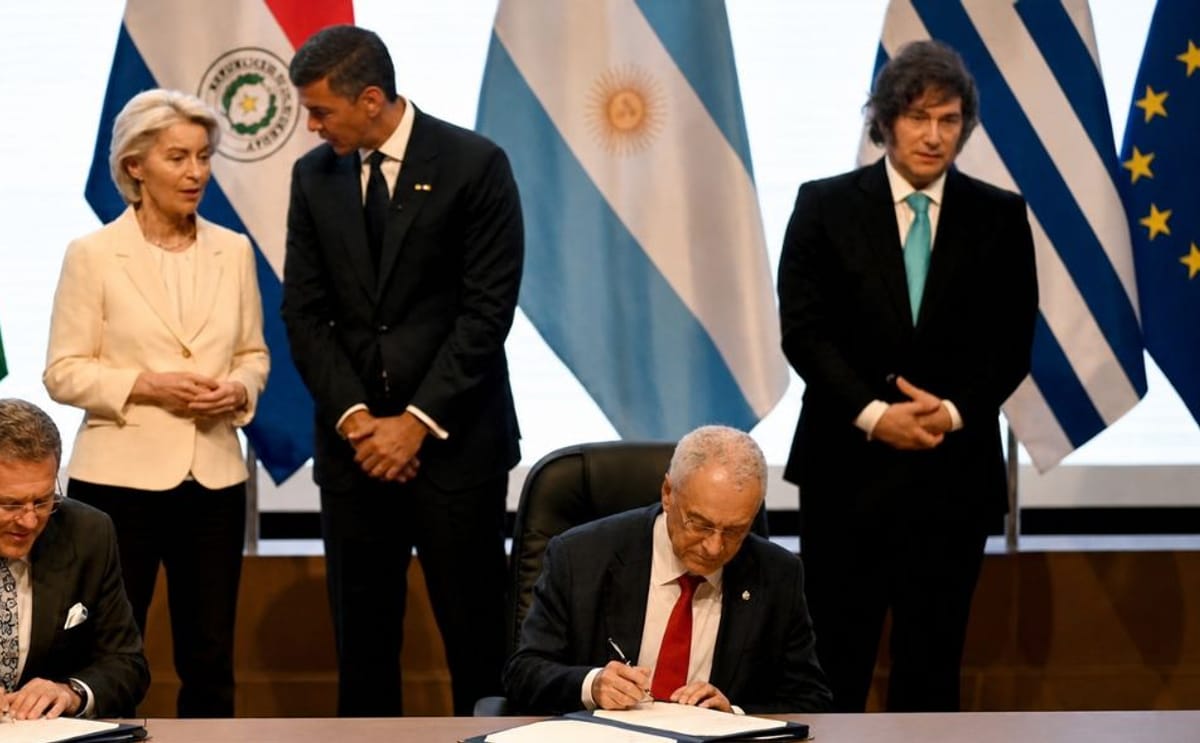
The long-awaited trade agreement between the South American bloc Mercosur and the European Union entered into force on Friday, at least provisionally. The initiative creates a transatlantic market valued at USD 22 trillion, with 720 million potential consumers, and some countries expect to increase their exports by more than 10% by 2038 once it is fully implemented.
The trade agreement was signed on January 17 at a meeting of the South American bloc. European Commission President Ursula von der Leyen’s decision to provisionally enact the agreement, effectively bypassing the European Parliament, is being challenged through EU legal actions before the bloc’s courts. The agreement will be suspended if the European body rules against it.
“This is good news for EU businesses of all sizes, good news for our consumers and good news for our farmers, who will gain valuable new export opportunities, with full protection for sensitive sectors,” she said on Thursday.
Von der Leyen is expected to hold a videoconference on Friday with the leaders of the Mercosur countries — Brazil, Argentina, Uruguay, and Paraguay — to celebrate the agreement.
Earlier this week, Brazil’s president, Luiz Inácio Lula da Silva, one of the main drivers of the deal, signed a decree validating it in his country. He said it was a response to the unilateral tariffs imposed last year by U.S. President Donald Trump and a reaffirmation of multilateralism.
“There is nothing better than believing in the exercise of democracy, in multilateralism, and in cordial relations among nations,” Lula said at a ceremony in the capital, Brasília, celebrating this milestone after more than 25 years of negotiations.
Last week, Brazil’s vice president and one of the negotiators of the agreement, Geraldo Alckmin, said in an interview with Associated Press and other news agencies that failing to reach the deal with the EU would have meant being left behind while competing countries signed other agreements.
Brazil is by far the largest economy in Mercosur, with an estimated gross domestic product of more than USD 2.3 trillion in 2025.
Lia Valls, associate researcher at the Rio de Janeiro-based Fundação Getulio Vargas think tank, agrees that the agreement offers better prospects in the face of growing unilateralism worldwide.
“The EU and Mercosur are showing that it is possible for large blocs to reach an agreement in this world where the multilateral system is weakening considerably and where the United States is clearly acting to make that happen,” Valls told AP. “It is a very positive signal.”
The agreement faced opposition from European farmers and environmental groups and was delayed in December before being referred to the Court of Justice of the EU.
South American agri-food industries, mainly beef, fruit, and minerals, expect exports to Europe to increase. European carmakers, pharmaceutical companies, and tech firms also expect to gain access to Mercosur markets.
While companies based in Mercosur countries have voiced concerns about strong competition from their European counterparts in high-tech industries, European farmers have expressed concern about inflationary pressures and imports that do not meet similar environmental standards.
French President Emmanuel Macron, one of the critics of the agreement, has long demanded safeguards to monitor and prevent major economic disruptions in the EU, tighter regulation in Mercosur countries — such as restrictions on pesticide use — and increased inspections of imports at EU ports.
The agreement gradually removes trade barriers and tariffs in both blocs, but also maintains economic safeguard clauses so that European countries can protect certain sectors from excessive competition, such as poultry, beef, sugar, and fruit.
Like to receive news like this by email? Join and Subscribe!
Get the latest potato industry news straight to your WhatsApp. Join the PotatoPro WhatsApp Community!
Related News
June 15, 2026
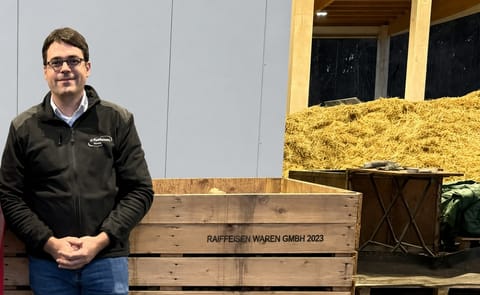
Raiffeisen Waren GmbH develops Wesendorf site into a modern potato logistics hub
Raiffeisen Waren GmbH continues to develop its Wesendorf facility into a modern potato center in Northern Germany, offering storage, sorting, packaging and logistics services for industrial, seed and table potatoes while supporting growers across the supply chain.
June 12, 2026
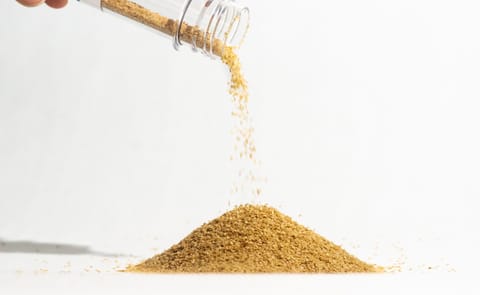
Solynta Makes History with First Hybrid True Potato Seed Variety Registered in the Netherlands
Solynta has registered SOLHY019 as the first diploid Hybrid True Potato Seed (HTPS) variety on the Dutch Variety List. The milestone validates hybrid potato breeding and supports wider adoption of seed-based potato production worldwide.

June 09, 2026
World Potato Congress 2026 Kenya: Exclusive Webinar to Preview Congress Program, Field Days and Tours
World Potato Congress Inc. will host a June 18 webinar previewing the 13th World Potato Congress in Kenya. The session will highlight the Congress program, field days, technical tours and key industry initiatives ahead of the October event.